Manage Blood Pressure to Protect Your Kidneys
Specialized Care for Kidney Filtering Disorders. Glomerular diseases affect the glomeruli.
High blood pressure, also known as hypertension, can damage the small blood vessels inside the kidneys over time. This damage may reduce their ability to filter waste effectively. Kidney disease can also contribute to high blood pressure, creating a cycle that may worsen both conditions.
Regular blood pressure monitoring, kidney screening, and appropriate medical management can help protect kidney function and reduce the risk of complications.
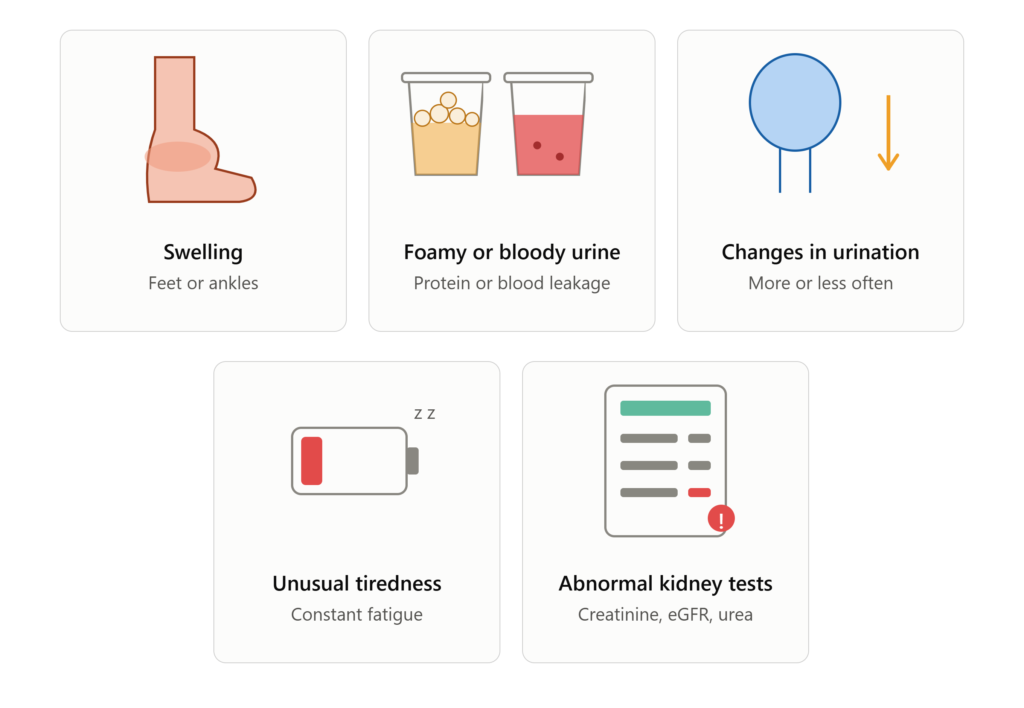
High blood pressure often causes no noticeable symptoms. When kidney disease develops, possible signs include:
Swelling in the feet or ankles.
Foamy or bloody urine.
Changes in urination.
Unusual tiredness.
Abnormal kidney function test results.
High blood pressure often causes no noticeable symptoms. When kidney disease develops, possible signs include:
Swelling in the feet or ankles.
Foamy or bloody urine.
Changes in urination.
Unusual tiredness.
Abnormal kidney function test results.
Evaluation may include:
Regular blood pressure monitoring.
Blood tests such as serum creatinine and eGFR.
Urine tests for protein or albumin.
Electrolyte level assessment.
Kidney ultrasound when required.
Review of medical history and current medications.
Evaluation may include:
Regular blood pressure monitoring.
Blood tests such as serum creatinine and eGFR.
Urine tests for protein or albumin.
Electrolyte level assessment.
Kidney ultrasound when required.
Review of medical history and current medications.
Management depends on the specific type and severity of glomerular disease. Treatment may include blood pressure control, medications to reduce protein leakage, immunosuppressive therapy when indicated, dietary guidance, and regular kidney function monitoring.
Book your appointment today for expert kidney care
Don’t miss our future updates! Get Subscribed Today!