
Kidney Transplant
A kidney transplant is a surgical procedure.
Here We provides you a specialized Care to Support Kidney Function.

Kidney Transplant
A kidney transplant is a surgical procedure.
Here We provides you a specialized Care to Support Kidney Function.
Overview
A kidney transplant is a surgical procedure in which a healthy kidney from a donor is placed into a person whose kidneys can no longer function adequately. It can be a treatment option for eligible patients with advanced kidney failure.
Dr. Anand Prasad provides specialist kidney care, helping patients understand transplant evaluation, preparation, and ongoing kidney health management.
Common Signs & Symptoms
Kidney transplantation may be considered when the kidneys have lost most of their ability to function. Patients with advanced kidney failure may experience:
Swelling in the feet, ankles, legs, or around the eyes.
Persistent tiredness and weakness.
Nausea, vomiting, or loss of appetite.
Changes in urine output.
Breathlessness due to excess fluid accumulation.
Difficulty concentrating or sleep disturbances.
Persistent high blood pressure.
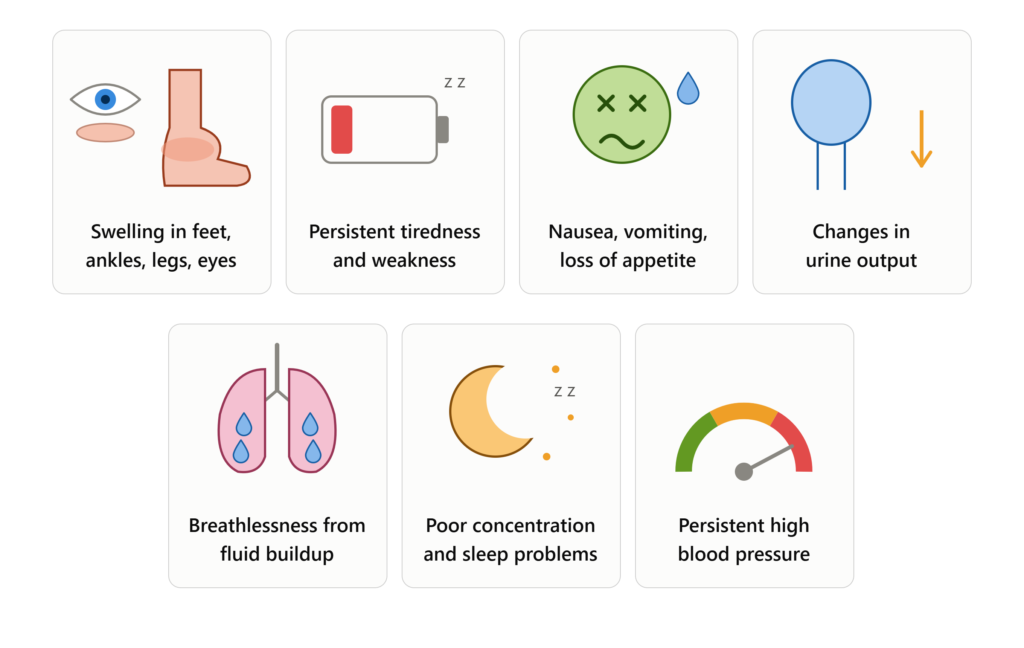
Kidney transplantation may be considered when the kidneys have lost most of their ability to function. Patients with advanced kidney failure may experience:
Swelling in the feet, ankles, legs, or around the eyes.
Persistent tiredness and weakness.
Nausea, vomiting, or loss of appetite.
Changes in urine output.
Breathlessness due to excess fluid accumulation.
Difficulty concentrating or sleep disturbances.
Persistent high blood pressure.
Causes & Risk Factors

Diagnosis & Management
Before kidney transplantation, a detailed medical evaluation is performed to determine whether the patient is suitable for the procedure.
Kidney Function Assessment: Blood tests, including creatinine and eGFR, help assess the extent of kidney damage.
Blood and Tissue Compatibility: Blood group and tissue matching tests help assess donor-recipient compatibility.
Overall Health Evaluation: Heart health, infections, and other medical conditions are assessed before transplantation.
Donor Evaluation: The potential donor undergoes medical testing to determine suitability.
Post-Transplant Monitoring: Regular follow-up, kidney function tests, and monitoring for complications are essential.
Medication Management: Anti-rejection medicines are required after transplantation to reduce the risk of the immune system rejecting the transplanted kidney.
Causes & Risk Factors
Diagnosis & Management
Before kidney transplantation, a detailed medical evaluation is performed to determine whether the patient is suitable for the procedure.
Kidney Function Assessment: Blood tests, including creatinine and eGFR, help assess the extent of kidney damage.
Blood and Tissue Compatibility: Blood group and tissue matching tests help assess donor-recipient compatibility.
Overall Health Evaluation: Heart health, infections, and other medical conditions are assessed before transplantation.
Donor Evaluation: The potential donor undergoes medical testing to determine suitability.
Post-Transplant Monitoring: Regular follow-up, kidney function tests, and monitoring for complications are essential.
Medication Management: Anti-rejection medicines are required after transplantation to reduce the risk of the immune system rejecting the transplanted kidney.
Ready to Consult Dr. Rajesh Goel?
Book your appointment today for expert kidney care