Effective Evaluation and Care for Kidney Stones.
Effective Evaluation and Care for Kidney Stones.
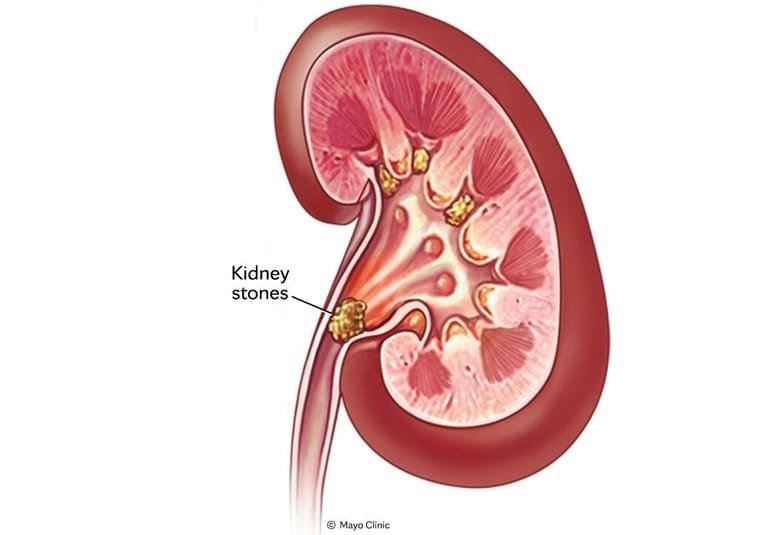
Kidney stones are hard deposits of minerals and salts that form inside the kidneys. Small stones may pass naturally through the urinary tract, while larger stones can cause severe pain, bleeding, or blockage of urine flow.
Understanding the size, location, and type of stone helps determine the most suitable treatment and prevention strategy.
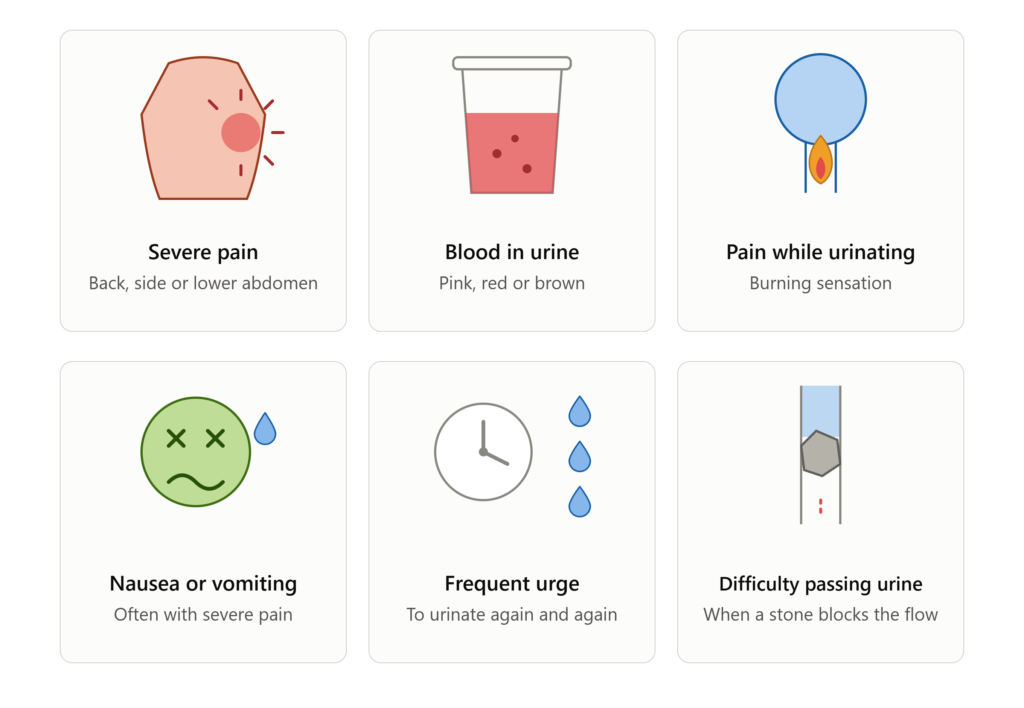
Severe pain in the back, side, or lower abdomen.
Blood in the urine.
Pain or burning while urinating.
Nausea or vomiting.
Frequent urge to urinate.
Difficulty passing urine when obstruction occurs.
Severe pain in the back, side, or lower abdomen.
Blood in the urine.
Pain or burning while urinating.
Nausea or vomiting.
Frequent urge to urinate.
Difficulty passing urine when obstruction occurs.
Urine examination.
Blood tests to assess kidney function.
Ultrasound of the kidneys and urinary tract.
CT scan when required.
Stone analysis to identify its composition.
Metabolic evaluation in recurrent cases.
Urine examination.
Blood tests to assess kidney function.
Ultrasound of the kidneys and urinary tract.
CT scan when required.
Stone analysis to identify its composition.
Metabolic evaluation in recurrent cases.
Management depends on the size, location, and type of kidney stone. Treatment may include pain management, prescribed medications, shock wave lithotripsy, or endoscopic procedures. Preventive care includes adequate hydration, dietary guidance, and regular follow-up.
Book your appointment today for expert kidney care
Don’t miss our future updates! Get Subscribed Today!